How to Potty Train in 3 Days - Snugkins Complete Guide

How to Potty Train in 3 Days - A Real Indian Parent's Step-by-Step Guide
Three days. That's all it takes - if you're prepared, consistent, and willing to spend a long weekend basically glued to your toddler's bathroom schedule. The 3-day potty training method isn't magic, but it does work, and thousands of Indian parents have used it successfully to transition their little ones out of diapers faster than they ever expected. Here's exactly how to do it.
Table of Contents
1. Is the 3-Day Method Right for Your Child?
2. What You Need Before Day One
3. Day-by-Day Potty Training Schedule
4. Handling Accidents Without Losing Your Mind
5. Key Takeaways
6. FAQS
Is the 3-Day Potty Training Method Right for Your Child?
Before you block out the weekend and stock up on Snugkins potty training pants, it's worth spending ten minutes honestly evaluating whether your toddler is actually ready. The 3-day method works beautifully when timing is right - and fails spectacularly when you push a child who simply isn't there yet. Age alone is a poor indicator. Some children are genuinely ready at 18 months; others aren't quite there at 30 months. What matters far more is the cluster of readiness signs they're showing.
The signs to look for: your child is staying dry for at least two hours at a stretch during the day, they show awareness of when they're urinating or having a bowel movement (even if it's after the fact - tugging at their diaper, squatting in a corner, telling you 'susu' or 'potty' after it's already happened), they can follow two-step instructions reliably, and they can physically pull their pants up and down. If four or more of these are present, you've got a good candidate for the 3-day approach.
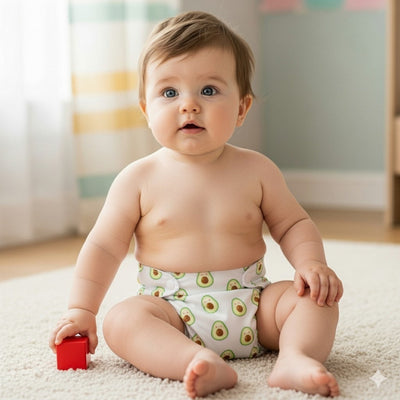
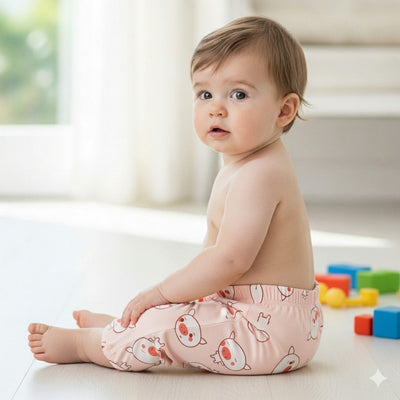
One more thing worth mentioning: the Indian climate actually plays in your favour here. If you're doing this during summer or early monsoon, light cotton training pants like Snugkins padded underwear are far more comfortable than plastic-backed diapers in the heat. Your toddler will genuinely appreciate not being wrapped in something sweaty, which makes them more cooperative about the whole transition. Timing the 3-day method during a long weekend or school holiday is ideal - you need full, undivided attention for all three days, which means this is a two-parent job if at all possible.
What You Need Before Day One Even Starts
Preparation is where most parents underinvest, and it shows on Day Two when they're running out of clean clothes and patience simultaneously. The night before you begin, get everything organised so Day One can start smoothly the moment your child wakes up.
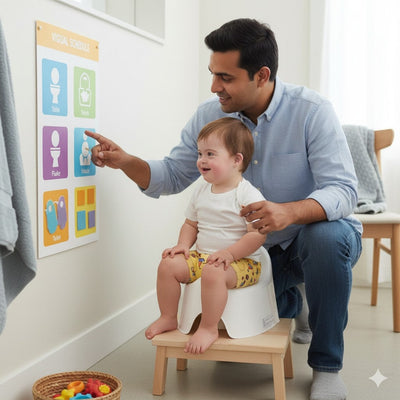
For supplies, you'll need: a potty seat or floor potty (floor potties work better for most Indian toddlers since they're more stable and less scary), at least 8-10 pairs of Snugkins cotton training pants, a waterproof mattress protector, extra bed sheets, a waterproof sofa cover if your toddler lounges on the couch, a reward system your child actually cares about (stickers, a favourite snack in small amounts, a stamp on the hand - whatever lights them up), and easy-to-remove clothing. Avoid dresses with complicated fastenings, dungarees, or anything that requires more than two seconds to pull down. Loose elastic-waist shorts or bottoms are your best friend this weekend.
Psychologically, prepare yourself too. You will see accidents - probably 8-12 on Day One alone. This is completely normal and doesn't mean the method is failing. Have a mop and disinfectant within easy reach. Tell any grandparents, helpers, or other family members in the house about the plan so they don't undermine it by offering a diaper 'just this once.' Consistency across everyone in the house is non-negotiable for this to work within three days.
The Day-by-Day Potty Training Schedule That Actually Works
Day One is the hardest. Start immediately after your toddler wakes up - take off the overnight diaper, put on Snugkins training pants, and don't look back. Explain in simple language: 'Susu and potty go in the pot now, not in your pants.' Take them to the potty every 20-25 minutes throughout the entire day, whether they ask or not. Watch for signals - a sudden stillness, crossing legs, squatting - and move fast when you see them. Celebrate every single success with genuine enthusiasm. Accidents happen without any scolding; just calmly clean up and say, 'Susu goes in the pot next time.' By evening, most children have had at least 1-2 successes. That's enough.
Day Two, the interval stretches. Move from every 20 minutes to every 30-40 minutes, and start waiting for them to initiate more. You'll notice they're starting to understand the sensation - they may freeze, grab themselves, or look at you urgently. That urgency is the learning happening in real time. Keep the training pants on all day. Some parents put a diaper on for nap time; this is fine as long as you frame it clearly: 'This is just for sleep.' Remove it immediately when they wake up.
Day Three is about consolidation. By now, most toddlers are having only 1-2 accidents a day, sometimes none. Start venturing slightly outside the house - a quick trip to the building compound or a nearby shop. Bring a portable potty or know exactly where the nearest toilet is. Keep Snugkins training pants on rather than switching back to diapers; the absorbent padding handles small accidents without panic while still giving your child the independence of real underwear. By evening of Day Three, you should have a child who is initiating at least some of their potty trips on their own.
Handling Accidents Without Losing Your Mind
Here's what nobody tells you in the parenting books: accidents on Day Two feel more demoralising than accidents on Day One, because by then you expected things to be improving. When your toddler has three accidents before lunch on Day Two, it's easy to wonder if you're doing something wrong. You're probably not. Learning bladder control is a physical skill, not just a behaviour change, and the muscles involved are genuinely still developing.
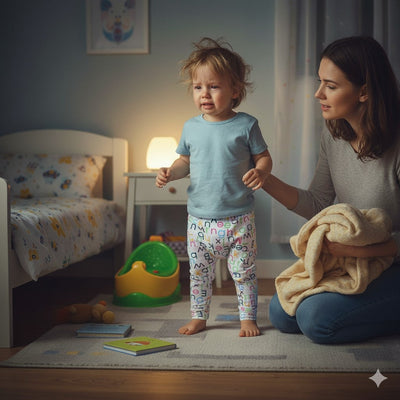
When an accident happens, the script is always the same - calm, matter-of-fact, no drama in either direction. Don't scold. Don't make a face. Don't sigh loudly. Just say 'Oops, the susu came out. Let's clean up and try the pot next time.' Then clean up together, put on fresh Snugkins training pants, and move on. The training pants make this genuinely easier than bare-bottom training because they contain the accident well enough to prevent it running down legs and onto the floor, which reduces the stress of the moment considerably.
Night training is a separate project entirely - don't attempt it during these three days. Use a diaper at night without guilt. Nighttime dryness depends on a hormone called ADH that many children don't produce in sufficient quantities until age 4-5, and no amount of daytime training changes that. Keep daytime and nighttime completely separate in your mind and in your messaging to your child. Three days gets you daytime training. Night training can wait.
3-Day Method vs Gradual Training vs Bare-Bottom Training
|
Factor |
3-Day Method |
Gradual Training |
Bare-Bottom Only |
|
Time to train |
3-5 days |
4-8 weeks |
3-5 days |
|
Parent effort |
Very high (3 days) |
Low but prolonged |
High (messy) |
|
Accident containment |
Good with training pants |
Diaper backup |
None - full mess |
|
Works for Indian homes |
Yes - plan a weekend |
Yes - flexible |
Difficult in monsoon |
|
Best age |
22-30 months |
18+ months |
22+ months |
|
Snugkins pants role |
Essential for containment |
Transition phase |
Backup for outings |
Expert Insight
"The 3-day potty training method is effective when the child shows genuine readiness - I tell parents that preparation and calm consistency matter far more than the specific technique they choose."
- Dr. Kavitha Ramesh, Developmental Paediatrician, Rainbow Children's Hospital, Bengaluru
Key Takeaways
• The 3-day method only works when your child is truly ready - look for dryness for 2+ hours, awareness of urination, and ability to follow instructions before you begin.
• Day One will have 8-12 accidents and that is completely normal - the learning curve is steep at first and flattens rapidly by Day Three.
• Night training is a separate milestone governed by hormones, not habit - use a diaper at night without guilt and tackle daytime and nighttime independently.
FAQs About the 3-Day Potty Training Method
Q: What age is best to start 3-day potty training in India?
Most children are ready between 22 and 28 months, though readiness signs matter more than age. Indian children in joint family settings sometimes train earlier because they have more toilet-using role models around them. Don't push before 18 months regardless of family pressure.
Q: Should I use training pants or go bare-bottom during the 3-day method?
Training pants are better for Indian homes - they contain accidents well enough to prevent floor mess while still giving your child the sensory feedback of feeling damp. Snugkins padded cotton training pants are particularly good for this because they're breathable in Indian heat and easy for toddlers to pull up and down independently.
Q: My toddler had no accidents on Day Two but regressed on Day Three - is that normal?
Yes, completely normal. Regression on Day Three often happens because the novelty has worn off and your child is testing boundaries, or because they're tired from two intensive days. Stay calm, maintain the same routine, and resist any urge to go back to diapers. The regression almost always resolves within 24 hours.
Q: What should I do when we need to go outside during the 3 days?
Keep outings minimal for the first two days. On Day Three you can venture out briefly - bring a portable potty or know where the nearest toilet is, put Snugkins training pants on rather than a diaper, and leave within 10-15 minutes of your child's last potty trip. Frame it as an adventure: 'Let's see if we can find the potty at the shop!'
Q: Do I need to wake my child at night to use the potty?
No - night training and daytime training are completely separate milestones. Night dryness depends on a hormone called ADH that many children don't produce adequately until age 4-5. Waking your toddler at night disrupts sleep without meaningfully accelerating night training. Use a diaper at night during this phase without any guilt.
Conclusion
The 3-day potty training method works best with the right gear from Day One. Snugkins potty training pants are made from 100% cotton with azo-free dyes - soft enough for sensitive toddler skin, absorbent enough to handle those first-day accidents without drama, and easy enough for little hands to pull up and down independently. Grab a pack before your training weekend and make those three days count.